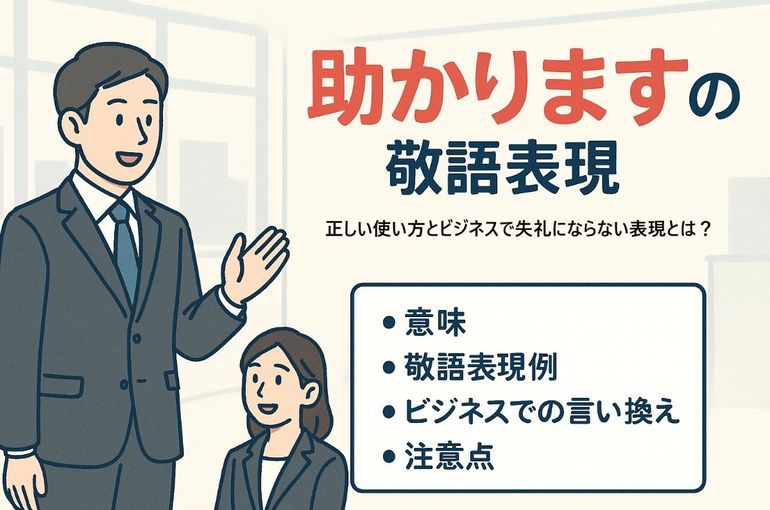
Many people have probably struggled at least once when it comes to using the expression "Thank you for your help" in a business email. Anxieties such as "Is this really the right way to say it?" and "Will it be rude to my boss or business partner?" are issues that business people face on a daily basis. In fact, there are many cases where mistakes in expression in business emails have led to trouble and a loss of trust.
Especially recently, with the increase in email exchanges both inside and outside the company, it is becoming increasingly important to choose the correct honorific language.
For those who are concerned about expressing gratitude or making requests with confidence in business situations, this article provides a thorough explanation of the meaning of "Thank you for your help," the correct honorific expression, alternative phrases, and specific examples for different situations. By reading to the end, you're sure to find tips that will make your daily email correspondence much smarter and leave a better impression.
Supporting you in achieving your goals through Japanese language lessons - Nihongo Learning Support LLC
Nihongo Learning Support LLC offers individual online Japanese conversation lessons. We offer lessons to meet a variety of learning needs, from beginners to advanced learners, including business Japanese and exam preparation for the JLPT. Our experienced Japanese language teachers propose a curriculum tailored to each learner's needs, creating an environment where you can learn comfortably and effectively. Online Japanese lessons allow you to study from anywhere. We provide an environment where you can enjoy learning Japanese, helping you to steadily acquire skills at your own pace.
| Japanese Learning Support LLC |
| address |
Shinjuku Entre Salon Building 2F, 2-12-13 Shinjuku, Shinjuku-ku, Tokyo 160-0022 |
| phone |
03-6881-9842 |
Lesson reservations/Inquiries
Basic knowledge of the polite expression "I'm grateful" and how to use it in business
The meaning and origin of "help"
"It would be helpful" means that you have been saved or rescued by the other person's actions or consideration. In everyday conversation, it is widely used as an expression of gratitude, such as "I'm grateful for your help." However, in business situations, there are many situations where more than simple gratitude, respect and politeness towards the other person are required, so even the same "it would be helpful" needs to be used with care. In particular, when communicating via email or in writing, more formal or honorific expressions are preferred.
The difference between polite language and honorific language
"It would be great if you could help me" is classified as polite language, but is often considered somewhat insufficient as honorific language. This is because it lacks the element of respect or humility, so it can be considered rude when used with superiors or business partners. In business emails and formal documents, it is recommended to use more polite expressions. Specifically, "I would be grateful," "I am very grateful," and "I am truly grateful" are appropriate. Also, when making a request or asking for something, it is important to choose words that take the other person's position into consideration, such as "I would appreciate it if you could assist me" or "I would be grateful if you could cooperate."
Examples of appropriate and inappropriate usage of "It's helpful" in business situations
In business situations, it is necessary to use different expressions depending on the other person's position and relationship. The table below compares common usage examples with appropriate alternative expressions.
|
scene
|
Inappropriate examples
|
Appropriate honorific expressions
|
|
Email to your boss
|
It would be helpful if you could respond
|
I would be grateful if you could respond
|
|
Contacting business partners
|
It would be helpful if you could give me some time
|
I would be grateful if you could give me your time.
|
|
Request to a senior
|
It would be helpful if you could check
|
Please check it out.
|
|
Company colleagues
|
It would be helpful if you could help me
|
I would appreciate your help
|
In this way, choosing the appropriate honorific expression depending on the person you are speaking to and the situation will improve the quality of your business communication and help build trust. Be mindful of the nuances and etiquette of the words you use, and try to use expressions that suit the situation.
Polite alternative expressions for "it helps" and how to use them appropriately
"It would be great if you could help me" is an easy expression to use in everyday life, but when writing business emails or to superiors or business partners, more polite and honorific language is required. By being mindful of the appropriate honorific language and expressions, you can convey respect and trust to the other person. Knowing the correct usage is extremely important in business etiquette.
List of commonly used honorific alternative expressions
There are several polite ways to say "it would be helpful." The main ones are introduced in the table below.
|
expression
|
Main uses
|
Nuance Points
|
|
It's very helpful
|
Within the company, superiors, seniors
|
Polite but somewhat casual and friendly
|
|
Thank you very much
|
Business partners/outside the company
|
Easy to use in formal situations, high-class
|
|
Thank you for your time
|
Superiors/business partners
|
Suitable for requests and apologies, and expresses a strong sense of gratitude
|
|
I'm happy
|
Superiors and general business
|
It is gentle and suitable for when you want to be considerate of others.
|
|
I am very happy
|
Official documents and business partners
|
Very polite and formal
|
|
I appreciate it
|
General gratitude
|
Polite but casual impression
|
By using these expressions appropriately depending on the situation, you can achieve more appropriate communication.
Tips on how to use it depending on your boss, senior, or business partner
In business situations, it is important to choose your expressions carefully based on your relationship with the other person and the situation. Use more polite expressions, especially when speaking with superiors such as your boss, seniors, or business partners.
-
To your boss or superiors
-
Appropriate phrases include "That would be very helpful," "I'm honored," and "I'm very grateful."
-
For example: "It would be very helpful if you could help me."
-
To business partners and outside parties
-
Choosing "I am grateful," "I am very grateful," or "I am fortunate" will give a more polite impression.
-
For example, "I would be very grateful if you could assist me."
-
To close friends and colleagues
-
Saying "I appreciate it" or "It would be very helpful" is fine, but in a business email it is more polite to add a buffer such as "It would be very helpful."
Usage list
-
Boss/senior: Thank you very much for your help/I'm grateful
-
Business partners/superiors: I am grateful/I am honored
-
Colleagues/in the company: I appreciate it/it helps
A collection of examples of thanking, requesting, and refusing in different situations
Below are example sentences that can be used in specific situations. Choose the appropriate expression depending on the situation.
-
To express gratitude
-
"We are extremely grateful for your cooperation."
-
"Thank you very much for your assistance."
-
When making a request
-
"I'd appreciate it if you could check it out."
-
I apologize for bothering you during your busy schedule, but I would appreciate it if you could send me the materials.
-
If you decline
-
"I'm sorry to disappoint you, but I will have to decline this time."
-
"I'm sorry I couldn't be of any help."
In business emails and correspondence with people outside the company, you can make a good impression by using polite and considerate language. The choice of expression will affect your relationship and credibility, so be sure to use the most appropriate honorific language for the situation and the person you are speaking to.
How to use "It's helpful" in business emails and examples of polite language
"It would be helpful" is commonly used in everyday conversation, but care must be taken when using it in business emails or when contacting superiors. In particular, when using it with business partners, superiors, or seniors, more polite language and appropriate honorific language are required. The table below compares incorrect ways to use "It would be helpful," examples of improvement, and appropriate honorific language.
|
NG expression
|
Improvement example
|
Commentary
|
|
It would be helpful if you could respond
|
I would be grateful if you could respond
|
"I'm happy" is more polite
|
|
It would be helpful if you could contact us
|
I would be grateful if you could contact me.
|
"Koshijin" is the highest level of respect
|
|
It would be helpful if you could send me the documents
|
Please send us the documents
|
Be more polite in your request
|
In this way, by using expressions appropriate to the situation and the person you are speaking to, you can give a polite impression.
Examples of bad email expressions and how to improve them
Using "It would be helpful" as is in a business email gives a somewhat casual impression and is not appropriate, especially when speaking to superiors or people outside the company. For example, "It would be helpful if you could accommodate me" is acceptable if you are on friendly terms, but is insufficient in situations where politeness is required. Examples of improvements include "I would appreciate it if you could accommodate me" and "I would be very grateful if you could cooperate." Also, while "I would appreciate it if you could do so" is a somewhat softer expression, in business emails, standard phrases such as "I would appreciate your consideration" and "I would appreciate your consideration" are more reliable.
Important points to note and tips for writing internal and external emails
Particular care must be taken when using external emails, so avoid using "it would be appreciated" and use polite phrases of request or gratitude such as "I would appreciate your assistance" or "I apologize for bothering you during your busy schedule, but I would appreciate it if you could confirm this." When sending internal emails to superiors, seniors, or colleagues, be sure to use polite language such as "I would appreciate your advice" when speaking to superiors. When choosing phrases, it is important to choose the most appropriate expression based on the recipient's position, relationship, and the purpose of the email.
A collection of frequently used polite phrases for requests and thanking others
Here is a list of polite phrases that are often used in business emails to express requests and gratitude. By using them appropriately depending on the situation, you can create a more sophisticated impression.
-
I would be grateful if you could respond
-
We appreciate your cooperation.
-
I would be grateful if you could give me some advice.
-
Please contact us.
-
Thank you for your confirmation.
-
We apologize for the inconvenience, but thank you for your cooperation.
By utilizing these, you can achieve natural and polite communication in a wide range of business situations. Be aware of variations in expression and try to choose words that are appropriate for the person you are speaking to and the situation.
Misunderstandings and answers to frequently asked questions about the honorific "I'm grateful"
Typical misuse patterns and reasons
"It would be a great help" is fine in everyday conversation or casual situations, but you should be careful when using it in business emails or when communicating with superiors or business partners. It shows a lack of respect and politeness for the other person and can come across as rude. In particular, simply saying "It would be a great help" to a boss, senior, or business partner can come across as a bit frivolous and may not fully convey your feelings of gratitude or request.
Below is a table summarizing common cases of misuse and the reasons for them.
|
scene
|
Misuse examples
|
reason
|
|
Request to your boss
|
It would be helpful if you could get this document by tomorrow.
|
Lack of courtesy and respect
|
|
Email to business partners
|
It would be helpful if you could give me your time
|
A bit casual in business emails
|
|
Consulting with seniors
|
Your cooperation would be much appreciated.
|
The nuance of gratitude or humility is weak
|
In such situations, it is appropriate to use more polite and honorific expressions.
Resolve questions from suggestions and related words
"It would be a great help" and "I'm grateful" are both expressions used to express gratitude, but there are differences in their usage and nuance. In business emails and formal situations, choosing more polite words will help convey a sense of trust.
|
expression
|
Suitable occasions
|
Politeness
|
Paraphrased example
|
|
It's helpful
|
Casual/In-house
|
usually
|
I'm happy, I'm grateful
|
|
It's very helpful
|
External/business emails
|
Somewhat polite
|
I am very happy and truly grateful.
|
|
I appreciate it
|
A wide range of situations
|
usually
|
I'm sorry, I'm happy
|
In particular, expressions such as "I am fortunate" and "I am extremely grateful" are polite expressions that can be used safely when speaking to superiors or business partners outside the company.
The latest trends in business etiquette and changes in honorifics for "helpful"
The latest trends in honorific language in modern business
In business situations, the expression "it would be helpful" is often used to express gratitude or to request cooperation, but in recent years there has been a growing trend toward more polite and appropriate honorific language depending on the person and the situation. In particular, in business emails and communications outside the company, it is recommended to use more polite phrases rather than simply saying "it would be helpful."
The table below lists some commonly used polite expressions and alternative examples of "it would be helpful."
|
scene
|
Paraphrased example
|
remarks
|
|
General business email
|
Thank you for your response
|
Polite and good impression
|
|
Superiors, bosses, business partners
|
I would appreciate your cooperation.
|
Ideal for outsiders and superiors
|
|
When making a request
|
We apologize for the inconvenience, but thank you for your cooperation.
|
Show consideration
|
|
Emphasis on gratitude
|
I am very grateful and fortunate
|
Very polite expression
|
"It would be a great help" sounds friendly, but choosing the appropriate honorific language can also convey trustworthiness and good business etiquette.
Differences in usage depending on age group, corporate culture, and historical background
The way "Thank you for your help" is perceived and used varies depending on the age group, corporate culture, and historical context. Casual expressions are more acceptable among younger generations and venture companies, but more polite honorific language is emphasized when speaking with traditional companies or older people. As times change, flexible word choice is required.
-
Younger employees and flat organizations: A somewhat casual "That would be helpful" or "Thank you"
-
In traditional organizations or when speaking to superiors: "I'm happy," "I'm very grateful," "I'm very grateful"
In this way, choosing expressions that take into consideration the other person and the organizational culture will lead to a good impression.
Honorific language adapted to diverse work styles
As teleworking and multicultural workplaces become more common, it is necessary to pay even more attention to honorific language. In online meetings and emails, unlike face-to-face conversations, the impression of the written word has a stronger impact on the other person, so it is important to use more polite honorific language and cushion words.
-
I apologize for bothering you during your busy schedule, but I would appreciate it if you could respond.
-
We apologize for the inconvenience, but thank you for your cooperation.
Be sure to use simple and polite language that is easy for foreign staff and team members from different cultures to understand. Careful choice of words will help build relationships of trust.
Points to consider when working remotely or in a multicultural workplace
In teleworking and multicultural workplaces, it is necessary to use honorific language that takes into account the other person's position and cultural background. For example, in situations where face-to-face conversation is not possible, it is preferable to choose more polite expressions in emails and chats.
Keeping these things in mind will help ensure smooth communication.
Supporting you in achieving your goals through Japanese language lessons - Nihongo Learning Support LLC
Nihongo Learning Support LLC offers individual online Japanese conversation lessons. We offer lessons to meet a variety of learning needs, from beginners to advanced learners, including business Japanese and exam preparation for the JLPT. Our experienced Japanese language teachers propose a curriculum tailored to each learner's needs, creating an environment where you can learn comfortably and effectively. Online Japanese lessons allow you to study from anywhere. We provide an environment where you can enjoy learning Japanese, helping you to steadily acquire skills at your own pace.
| Japanese Learning Support LLC |
| address |
Shinjuku Entre Salon Building 2F, 2-12-13 Shinjuku, Shinjuku-ku, Tokyo 160-0022 |
| phone |
03-6881-9842 |
Lesson reservations/Inquiries
Company Profile
Company name: Japanese Learning Support LLC
Address: Shinjuku Entre Salon Building 2F, 2-12-13 Shinjuku, Shinjuku-ku, Tokyo 160-0022
Phone number: 03-6881-9842