Let's read the story about the cat and the mouse! Level up your Japanese with the Japanese reading series!
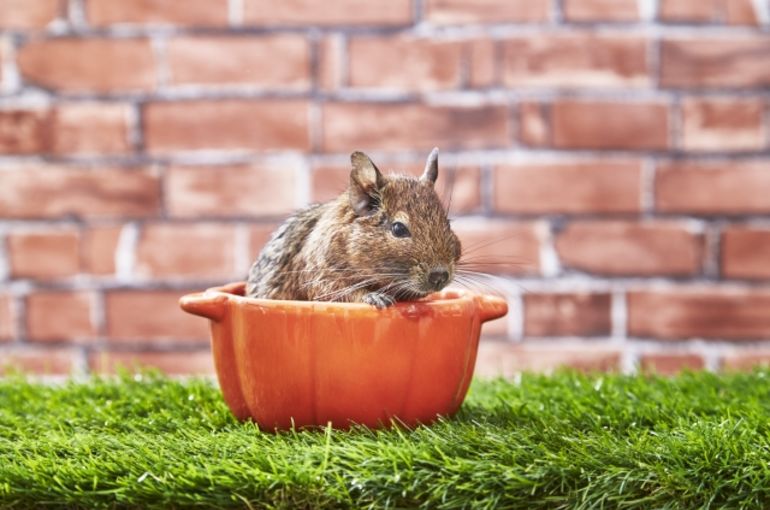
Let's read Japanese folk tales!
Have you ever been learning Japanese and found it difficult to memorize grammar, or that particles are difficult?
In such a case, read JLS's Japanese reading materials and have fun improving your Japanese!
New Japanese discoveries are waiting for you!
Also, please read the Japanese explanations that appear in the story below.
"Cat and Mouse"
Once upon a time, there lived a kind grandfather and grandmother.
One rainy day, an old man was gathering vegetables in the mountains when he found a kitten.
Grandfather: "What are you doing on a rainy day like this? It must be cold. Okay, okay, let's take you home and give us something warm to eat."
So he took the kitten home.
Grandma: "Oh, it's a cute little cat."
Grandfather: "Let's get you something to eat."
The grandfather and grandmother prepared warm food and a bed for the kitten, and took good care of it.
One day, when the old man went to the barn,
♪ Polish, polish. Mouse's treasure~♪
I heard this song coming from a small hole in the floor.
Grandfather: "Hey. I wonder if there's a mouse living in a place like this."
*Barn: A room where you keep things, something like a warehouse.
The next day, the cat went to the barn.
Then, the mouse was picking up beans that had fallen out of the bag.
The cat jumped on the mouse.
Cat: "Meow."
Mouse: “Hey!!”
The mouse said to the cat.
Mouse: "Cat, please, please don't eat me. We have a job polishing treasures during the rainy season. This is hard work, and our mother is tired and sick. That's why I decided to give these beans to my mom to make her feel better.If she gets better after eating this, I'll come back here to feed you. .Please wait a bit."
The cat let the mouse escape.
When the mouse went back into the hole and was feeding his mother some beans, small beans fell into the hole one by one.
When the mouse looked up, he saw that the cat had dropped beans for him.
After eating the beans, the mother also became well.
Mouse: "Thank you very much, cat. Please eat me as you promised."
The mouse said this and came out of the hole.
When the cat saw the mouse, it ran out of the barn.
The mouse was impressed by the cat's kindness.
A few days later, when the old man went to the barn, he saw many large and small coins coming out of the mouse holes.
Grandfather: “What is this!?”
Then a family of mice came out of the hole,
Mouse: "Thanks to you, my mother is feeling better and I've finished polishing the treasure. Thank you very much."
Grandfather: "Oh, I see. That's good."
Mouse: "This is just a small token of my gratitude. Please."
The mice put the large and small coins in front of the old man.
Grandfather: "Are you giving this to us? Thank you!"
*Obashi Koban…Old money
After that, the old man and the old woman were able to live without any inconvenience, and the cat and mouse lived happily together.
How was it.
Kindness and kindness may be contagious to others.
It was a heartwarming story that made everyone happy.
So today, let's study Japanese from this story.
"Please, please don't eat me."
That's what the mouse said to the cat.
Let's focus on the "whether" part.
There is a word that has a similar shape to the word ``please''.
What is the difference between these two?
●Difference between “please” and “please”
・Thank you very much.
·Nice to meet you.
Both of these expressions for requesting are correct sentences.
However, the nuances are slightly different, so let's consider the differences by looking at example sentences.
Sentences using "please"
Sample1 I hope you will be able to get into university this year.
Sample2 (at the hospital) Teacher! Please help my son.
In this way, "please" contains the meaning of the speaker's strong hope and heartfelt request.
It may not be possible, but please do it anyway! That's a strong feeling.
Sentences using "please"
Sample1 Well, please give me a call.
Sample2 Please enjoy your meal.
"Please" is used when recommending an action to someone.
It's not a strong request, so it's up to the other person to decide whether they really want to take that action or not.
Even in the sentence ``Thank you for your support'' that I introduced at the beginning, you can actually find a difference in the situation between the two sentences. ↓
The sentence ``Thank you in advance'' has the meaning of a strong hope or request, so it is used in situations like this.
Sample Mother: (At school) Teacher, my son is at an important time when he is being recommended for a university. Please give strict guidance. Thank you very much for your support. ”
``Thank you very much for your help'' indicates that you are recommending the other person.
Sample Nice to meet you! This is Tanaka. Nice to meet you.
This is often used to introduce oneself.
Well, that's it for today's Japanese learning!
Everyone, how did you like the story and Japanese explanation?
The JLPT exam in December is fast approaching, so please try your hand at reading and listening comprehension while paying attention to these small nuances.
See you on the next blog!